
Platform
Industries

(855) 799-7905
Mon–Fri 8:00–23:00 ET · Sat–Sun 8:00–20:00 ET

INDUSTRIES · COLLECTIONS

Collect the small balances profitably.

When a call costs $5–7 in agent time and the balance is $20–30, automation isn't optional. Pay-by-phone, pay-by-text and a dialer built for AR — that's CM Recovery.

USE CASES

What our clients in collections run

CM Recovery is CenterMaster set up for accounts receivable: self-pay first, agents where a conversation pays for itself.

  • Automated balance reminders with self-pay

    A text or a call with a way to pay right there — in the evening or at the weekend, when people actually pay their bills.

  • 90+ bucket campaigns

    Dedicated campaigns for the oldest balances, with their own scripts, hourly volume and agent team.

  • List stratification

    A Boolean list filter parses any list any way you want; reload and redial the new segment immediately.

  • Blended queues for callbacks

    Agents move between outbound campaigns and inbound callbacks, so a returned call doesn't wait for the next shift.

  • Reporting for reconciliation

    Payments and contact outcomes in reports and data feeds your finance team can reconcile.

TCPA · REG F · PCI

The rules we build around

CenterMaster is built to support your TCPA and PCI obligations. How you run the campaigns decides compliance; here is what we give you for each rule.

Collections rules and what CenterMaster does about them
The ruleWhat we do about it
TCPA: a person to talk to, a way to opt outDialing modes and hourly call limits you set, live calls passed to agents, and opt-outs handled automatically.
Calling windowsAfter 8 a.m. and before 9 p.m. in the consumer's time zone. The dialer calls each calling group only inside its own schedule, in local time.
Repeated-call limitsRepeated calls are where the $500-per-call fines live. Retry limits are set per campaign. The Boolean list filter pulls numbers out of a redial list before they're called again.
Card data (PCI)Card capture in the IVR or ITR keeps the number away from the agent; automatic redaction removes it from recordings.

PAY-BY-TEXT · PAY-BY-PHONE

The same balance, two ways to pay.

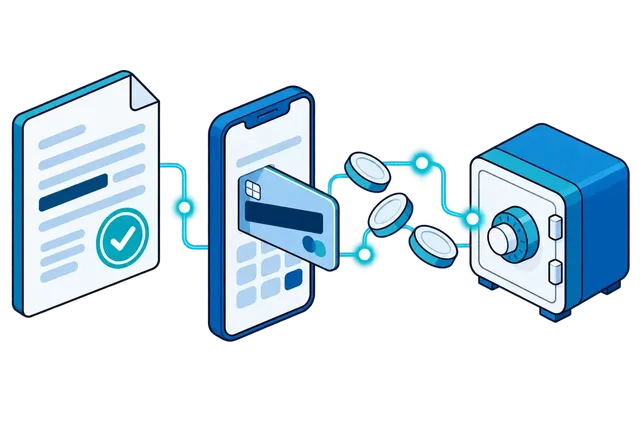
Switch tabs to see the text flow and the phone flow. In both, the payment lands in your system — and in the phone flow, the agent never hears the card.

  1. Balance list loaded nightly from billing
  2. Reminder text: reply 1, 2 or STOP
  3. Branch “no reply 48h”: Retry once, then IVR voice reminder
  4. Follow-up done
  5. Read the reply
  6. Branch “1”: Secure pay flow in the text thread
  7. Posted to your system, receipt sent
  8. Branch “2”: Queued to an agent, account on screen
  9. Done
  10. Branch “STOP”: Opted out — number suppressed

CASE STUDIES · CLIENT NAMES WITHHELD

What collections look like in numbers

COLLECTIONS · HEALTHCARE AR · SINCE 2006

Small balances, collected for under 50¢ each

Context
A large medical equipment provider — our largest client. A small balance is left on nearly every purchase.
Challenge
At least 30% of patients don't pay until contacted. Agent calls cost $5–7 each against $20–30 balances.
What we did
Fully automated outreach — SMS, dialer and inbound IVR — wired to the client's payment system. Little to no upfront cost to the client.
Results
$17M collected in a record year (2017) · from $1M in year one (2006) · < 50¢ total cost per payment
Ask about this program

Questions we hear

Does the money go straight to our account?

Payments post to your payment system, not ours, and the money is deposited into your accounts immediately.

What dialing modes work for AR?

Predictive, progressive, power and preview, chosen per campaign. Each campaign has its own calls-per-hour and SMS-per-hour limits. Keep the volume realistic: people rarely hold if the first thing they hear is "please hold". More on the outbound dialer.

Bring a real list. We'll build the flow on the call.

Bring a balance file. We'll build the pay-by-text and pay-by-phone flow with you on the call.

CallBook a demo