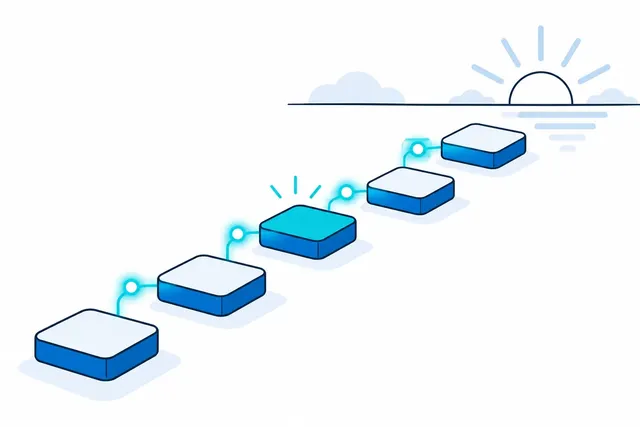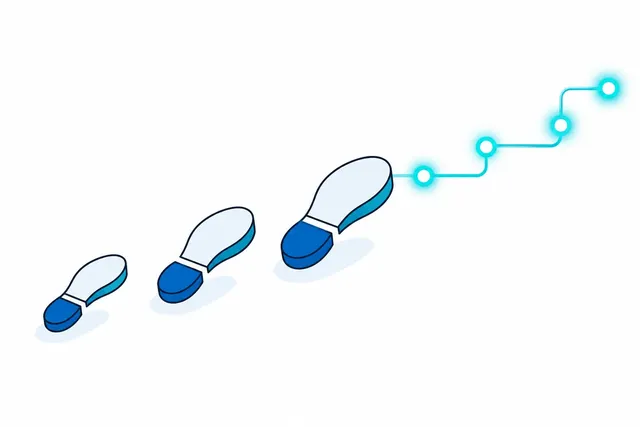
Where to start is the hard part
At AcuCall, we've found that more contact centers need help deciding where to start than with implementing AI itself. An automation strategy takes time, mostly because change is hard. People have habits, systems have history, and customers notice every change you make to the way you reach them.
Deploying anything new is challenging, whether it's a new IVR call flow, a text flow in our ITR, or any other technology. That's why every automation project we run begins with a needs analysis and journey mapping, before anyone picks a technology. We ask what your customers are trying to do, where they get stuck today, and what a good outcome looks like for them and for you. Knowing the journey first is what makes the automation stick.
Not all automation needs AI
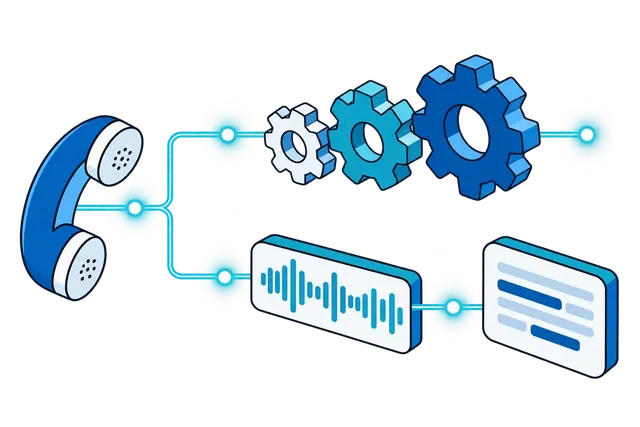
Plenty of useful automation involves no AI at all. Distributing calls by predefined rules is a good example: it doesn't need AI, and it still cuts wait times and sends customers to the right place. The same is true of capping a dialer at a set number of calls per hour, filtering a list before a campaign, sending a reminder text, or taking a payment inside a text thread. These are rules, and rules are predictable, testable and cheap to run.
Where we use each
- Automation, no AI: call routing and ACD rules, dialer hourly limits, list filters, IVR and ITR decision logic, reminders and payment steps.
- AI: our own speech recognition and text-to-speech, which read prompts aloud and understand spoken answers in IVR flows; automatic transcription of recorded calls; and automatic redaction of card numbers and health details in those recordings.
That's the whole list. No robot holds conversations with your customers, and coaching is done by people: a supervisor who can listen, whisper, barge in or take over a call.
Recordings are the raw material
Even our most basic installations record and store customer contacts. Those recordings are where better self-service starts. Reviewing them shows which questions customers ask most, where they get stuck and what they want to happen next, and those answers become the next automated flow. Automatic transcripts make that review much faster: your team can read through a day of calls instead of listening to every minute.
Automation follows the journey. AI does the jobs a person shouldn't have to do by hand.
Outreach pays back faster
Many companies focus their automation on agents answering inbound service calls. We believe a far larger and faster payback comes from working out how to reach new customers, and how to sell existing customers more of the products and services they already value.
Finding new customers and markets, and helping them buy from you, will always be one of a contact center's top goals. Automation should serve that goal first.
If you'd like to learn more about how we can help your contact center get there, send me a message.